
Is My Landlord Responsible for Mold in Texas? What the Property Code Says
You rent a house or an apartment in Corpus Christi, TX. The closet smells musty, a ceiling corner is stained, and the AC drips in the hall. Does the landlord have to fix it? This guide sets out what the Texas Property Code says, in its own words where possible, and what TDLR (the state mold licensing agency) says it can and cannot do. It is general information, not legal advice.
Corpus Christi Mold Remediation is a free quote service, not a mold company. You describe the problem once, and independent mold inspection and remediation companies may reply with quotes. Some of those companies may pay to receive requests, and they reply on their own schedules.
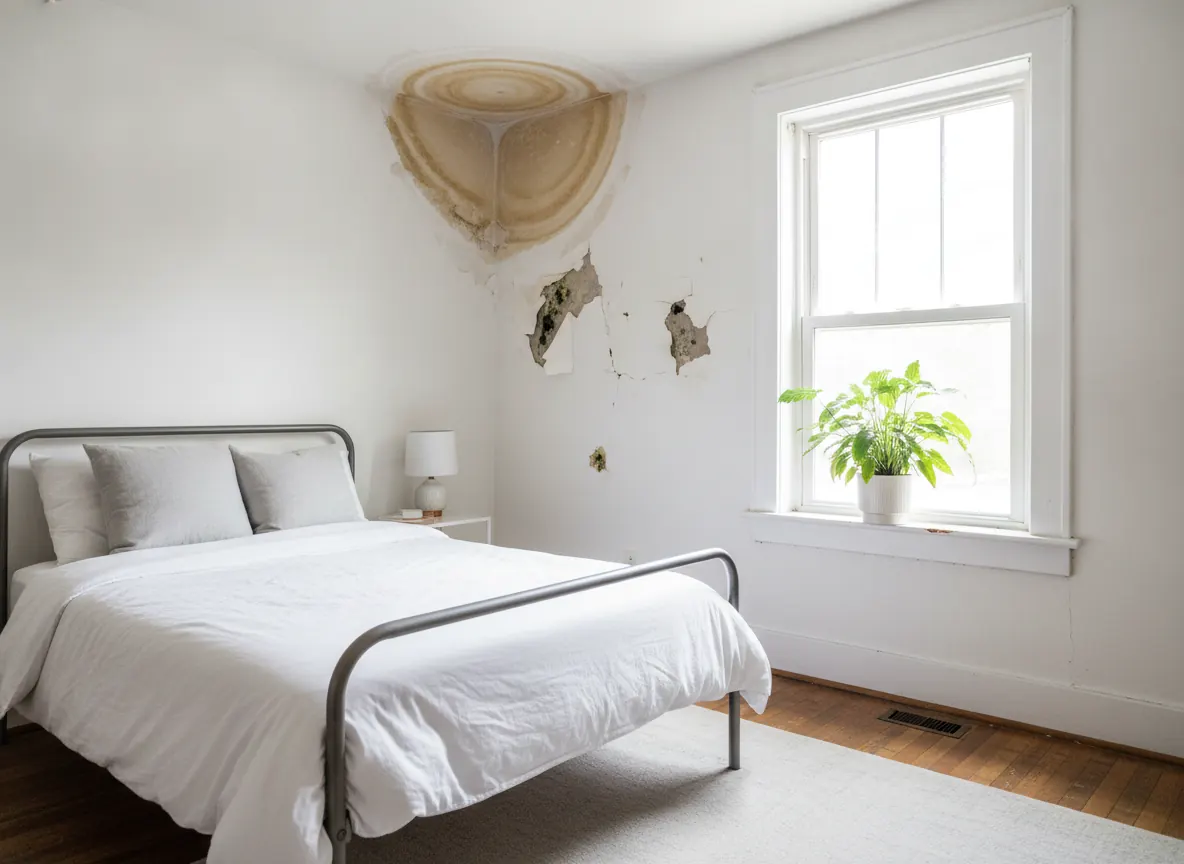
Does Texas law say landlords are responsible for mold?
Not by name. Chapter 92 of the Texas Property Code, which covers residential tenancies, does not mention mold. What it covers is the landlord's duty to repair certain conditions once the tenant gives notice. A leak that keeps a wall wet, or a broken AC drain, can fall under that duty when it meets the statute's test.
TDLR's 2025 consumer sheet is blunt about its own limits: "Current Texas law does not require landlords or property owners to inspect for or clean mold," and TDLR "cannot require a landlord or someone else to clean or remove mold." So the path for most renters runs through the repair rules in the Property Code, not through the mold licensing agency.
What §92.052 says about repairs
Section 92.052(a) says: "A landlord shall make a diligent effort to repair or remedy a condition if: (1) the tenant specifies the condition in a notice to the person to whom or to the place where rent is normally paid; (2) the tenant is not delinquent in the payment of rent at the time notice is given; and (3) the condition: (A) materially affects the physical health or safety of an ordinary tenant."
Three details matter in practice:
- Notice goes where rent goes. Send it to the person or office where you normally pay rent.
- Rent must be current. The duty applies when the tenant is not behind on rent at the time of notice.
- Tenant-caused conditions are excluded. Under §92.052(b), there is no duty for conditions the tenant caused, other than normal wear and tear.
Under §92.052(d), notice has to be in writing only if your lease is in writing and requires written notice. Writing is still the safest choice, because it gives you a dated record.
In short: If mold comes from a leak that affects health or safety, Texas Property Code §92.052 can require the landlord to make a diligent effort to repair once you give proper notice (in writing is safest). After hurricane damage, the repair clock may wait for insurance proceeds (§92.054). Not legal advice.
How to give notice about mold in a Texas rental
Document what you see
Take dated photos of the growth, the stain and anything wet. Note when you first noticed the smell and whether it gets worse after rain or when the AC runs.
Describe the condition, not just the mold
Name the likely source if you can see it: a roof leak, a dripping AC closet, a wet wall behind the tub. The repair duty is about the condition.
Send written notice to where rent is paid
Keep a copy. Stay current on rent.
Follow up in a way that can be tracked
Section 92.056(b)(3) refers to a subsequent written notice, or a first notice sent "by certified mail, return receipt requested, by registered mail, or by another form of mail that allows tracking."
Give it a reasonable time
Under §92.056(d), "there is a rebuttable presumption that seven days is a reasonable time" to repair. Rebuttable means the facts can change it.
The key sections at a glance
| Section | What it covers (plain summary) |
|---|---|
| Prop. Code §92.052 | Landlord's diligent-effort duty to repair a condition that materially affects health or safety, after notice, if rent is current |
| Prop. Code §92.054 | Insured casualty losses: the repair period waits for insurance proceeds; (b) and (c) address ending the lease or reducing rent when the unit is totally or partially unusable |
| Prop. Code §92.056 | Follow-up notice by certified, registered or tracked mail; seven days presumed reasonable |
| Occ. Code §1958.102 | When owners, tenants and their employees can do mold work without a TDLR license |
| Occ. Code §1958.155 | Assessor and remediator must be different companies on the same project |
Summaries of statute text for general information. Read the statute or ask a lawyer about your situation.
After a hurricane: why repairs can take longer
Corpus Christi renters know storm season. Section 92.054(a) says: "If a condition results from an insured casualty loss, such as fire, smoke, hail, explosion, or a similar cause, the period for repair does not begin until the landlord receives the insurance proceeds." Subsections (b) and (c) cover ending the lease or reducing rent when the unit is totally or partially unusable. After a storm, ask your landlord in writing whether an insurance claim is open, and keep your own photos. Our hurricane and flood mold guide covers drying and documentation.
What Texas mold rules mean for landlords
Landlords have their own set of rules under Occupations Code Chapter 1958. Texas requires TDLR licenses for mold assessment and remediation work on 25 or more contiguous square feet (Occ. Code §1958.101–.102). Verify any company at tdlr.texas.gov/LicenseSearch.
- Owner exemption. Under §1958.102(e), an owner, or a managing agent or employee of an owner, is not required to be licensed for work on a residential property owned by that person with fewer than 10 dwelling units. TDLR's rule says that exemption applies regardless of the size of the mold area. It does not cover a managing agent or employee who does mold work for the public.
- Hired companies. When a landlord hires out a job of 25 contiguous square feet or more, the companies need TDLR licenses. In Texas, the company that assesses your mold and writes the protocol cannot be the company that removes it on the same project, and one owner can't hold both (Occ. Code §1958.155).
- The certificate. Ask for the Certificate of Mold Damage Remediation (TDI form MDR-1). Insurers can't make underwriting decisions based on remediated mold damage when you have it (Ins. Code §544.303), and you must give buyers copies from the last five years (§1958.154(b)).
Small-landlord exemptions have conditions, so check the current statute before relying on one. For job sizes and the steps on a licensed project, see Texas mold rules and the 25 square foot line.
How many people rent here?
A lot. In the city of Corpus Christi, 57.9% of occupied homes are owner-occupied (ACS 2020–24 5-year), so roughly 42% are rented (computed from the same table). Kingsville is 44.2% owner-occupied on the same survey, the lowest share in the Coastal Bend towns this site covers. Mold questions between landlords and tenants come up often in both places.
Who pays, and what it might cost
Who pays depends on the cause, the lease and the facts. For scale, published national estimates put a bathroom job at $500–$1,500 (Fixr, Aug 2025) and a standalone mold inspection at $450–$800 (Fixr, Jan 2025). Our mold remediation cost guide for Corpus Christi has the full table and a calculator. Quotes come from independent companies, not this site.
If you need proof of what is in a wall, a licensed assessor can document it. See mold inspection and testing and our longer guide to rental and landlord mold.
Where Texas renters can get help
TDLR's consumer sheet points tenants to the local health department, the State Bar of Texas Lawyer Referral Service at (800) 252-9690, and texastenant.org. A lawyer can tell you whether a remedy applies to your lease.
When you are ready for quotes, whether you are the tenant documenting a problem or the landlord fixing one, describe the problem once or call (361) 247-3040.
Frequently asked questions
Is my landlord responsible for mold in Texas?
Texas Property Code Chapter 92 does not name mold. Under §92.052, a landlord must make a diligent effort to repair a condition that materially affects the physical health or safety of an ordinary tenant, once the tenant gives notice to where rent is paid and is current on rent. A leak causing mold can fall under that duty. This is general information, not legal advice.
How long does a Texas landlord have to fix a mold problem?
Section 92.056(d) creates a rebuttable presumption that seven days is a reasonable time to repair. After an insured casualty such as a storm, §92.054 says the repair period does not begin until the landlord receives the insurance proceeds. The facts of each case can change what is reasonable.
Can I break my lease for mold in Texas?
Section 92.054(b) and (c) address ending the lease or reducing rent when a casualty makes the unit totally or partially unusable. Outside that, whether you can end a lease over mold depends on the facts and your lease. Talk to a lawyer before you stop paying rent or move out. The State Bar Lawyer Referral Service is (800) 252-9690.
Does a landlord have to test for mold in Texas?
TDLR says current Texas law does not require landlords or property owners to inspect for or clean mold, and TDLR cannot require a landlord to clean or remove it. The repair duty in Property Code §92.052 is about the condition, such as the leak, once proper notice is given.